 The Lifeworld Project
About the Project
Returning models to their proper place.
The Lifeworld Project is built on a single move: returning models to their proper place as instruments within lived experience, rather than rulers over it.
Where it begins
Before anything is measured or modeled, the world is already there, encountered as meaningful — stifling or spacious, heavy or light, pressing or calm. A philosopher named Edmund Husserl called this the lifeworld: the lived ground from which every model is later abstracted, and to which every model stays answerable. It is not private fantasy. It is the shared human world in which anything can matter at all.
This project draws on Husserl and the philosophers who followed him — Merleau-Ponty, Bergson — but no background in them is needed here: the ground they studied is the one you already live on.
The unnoticed reversal
Something happens as our models grow powerful. A tool built to extend our contact with the world comes to be treated as more real than the contact itself, and granted the final say over it. The clock overrules the felt urgency; the framework overrules the felt grief; the picture of who I am overrules the person actually living. This project calls it the reversal of rank.
It is one move, and it runs the same way whether it is aimed at the world — a scientific model mistaken for reality — or at the self — a self-story mistaken for the living person. And a model need not be a number. A worldview, a doctrine, a diagnosis, an ideal, even a cultivated inner witness — any of these can be ranked above lived contact and made to stand in for it.
One world, restored to order
The resolution is not to reject models, reason, or structure — they are real and useful, and the project keeps every one of them. It simply stops asking them to rule. The resolution is to restore one world to its proper order. The clock and your felt urgency are not rivals in a contest only one can win; they answer different questions about the same situation, and both answers are fully real. Your lived sense of the afternoon is not "merely subjective," shut away in some private inner theater — it is your contact with the one world we all share.
But the two are not equals. A model is always drawn from lived contact — abstracted from it, and answerable to it — so lived contact keeps the deeper claim. The model holds full authority over what it is actually good for, and loses the borrowed authority it had taken over meaning, mood, and worth. Restoring the proper order is not picking one side and cancelling the other, and it is not sending the two to separate rooms. It is returning the model to its place as an instrument within the world you live.
When that order is restored, something loosens. Lived contact becomes legitimate evidence again — not "always trust your feelings," but the slow recovery of a sense that your own experience counts. Ordinary judgment thickens. And the models, oddly, work better — because they are no longer asked to judge meaning, readiness, or the texture of a life. None of this makes the schedule lighter or the grief shorter; more alive is not the same as easier.
Who it's for
This project is created for a particular kind of person: analytical, reflective, serious about growth — someone who has done real inner work and still finds themselves caught in self-monitoring, over-analysis, and a dependence on frameworks. Drawn to science or to contemplative practice, or both; allergic to vague spirituality on one side and to being optimized on the other. If a measure, a framework, or a "supposed to" has ever overruled what you actually lived — and some part of you noticed — this is for you.
Who's behind this
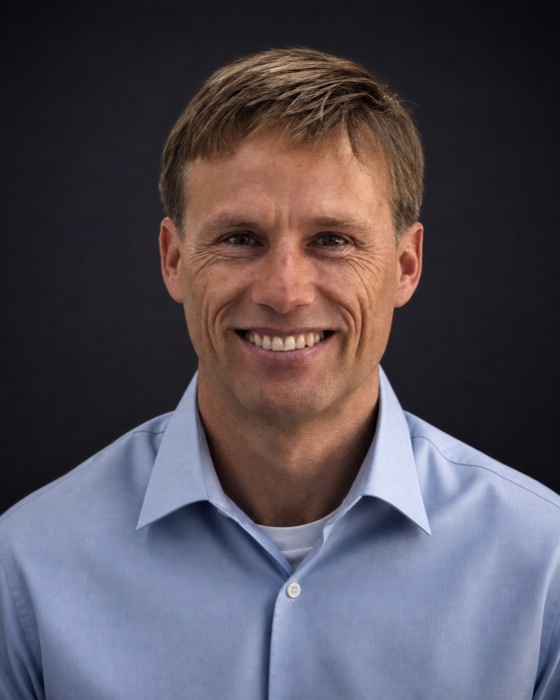
I'm Bill Scuba. The shortest way to explain this project is a car ride. I was driving home from a week on a dude ranch outside Tucson, my family with me, listening to a long interview with the astrophysicist Adam Frank. Nearly two and a half hours in, Frank began describing his book The Blind Spot — about a science that treats its objective picture as complete while setting aside the direct experience it was drawn from. The recognition was immediate and physical. Within the first pages of the book itself I was sure: this was the thing I had been circling for twenty-five years.
For those twenty-five years I had been living two lives that refused to reconcile. In one I was a research scientist — trained in physics, and pulled by a lifelong habit of chasing fundamentals: oceanography at the Scripps Institution of Oceanography, drug discovery at Novartis, biomedical research at the University of Utah, conducting clinical studies at Qualia Life Sciences. In the other life I was deep in the growth world: twenty-five years of meditation, and a long tour through what that world offers — therapy, bodywork, seminars, yoga practices.
The two would not settle. I oscillated — think like a scientist, or think like a growth practitioner? — and what bothered me most was that it felt forced that I had to make the choice at all. More than once it stopped me from going deeper: the growth work would beckon, and the scientist in me wouldn't sign off; science would beckon but it felt like something was missing. Frank's book named the error I couldn't. Science's rigor is real; so is its habit of vetoing the very experience it grew from. The growth world's trust in experience is real; so is its tendency to float when the rigor is missing.
When the reconciliation came, it came the way physics had taught me such things come — not as a truce, but as a higher view. Electricity and magnetism were once two forces; then came the view in which they were one field, and had been all along. Not a truce between two worlds — a recognition that they were never two. That is what phenomenology, and eventually this project, gave me. The Lifeworld Project is that reconciliation, lived first, and offered here.
A question to carry
If you take one thing from this page, take the question the project keeps returning to. Any model in a life — a framework, a practice, a self-story — can be asked it: does holding it take you deeper into trust with yourself and your connection to the world, or farther away? Not whether it is true — which way it is carrying you. A model in its proper place enlarges the world: learn what a melody is, and you hear more music. A model holding the wrong rank sends you back with an asterisk on everything you feel. The essays are attempts to make that question easier to ask; Share a Problem is where I hear how it runs in real lives.